
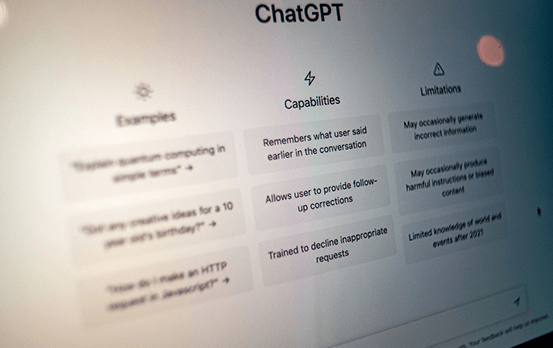
When someone asks ChatGPT, Gemini, or Perplexity "where's a good place for X near me," the assistant isn't reading your whole website. It's scanning for a sentence that already answers the question in plain language. If your content is written the way customers actually ask things, an AI assistant can lift it almost word for word and hand it to the person asking. If it isn't, the assistant moves on to a competitor whose page made the job easier. This post is for any local business owner who wants to understand why the shape of your sentences matters as much as the information inside them, and what to do about it.
Why AI Assistants Prefer Ready-Made Answers
Large language models don't "crawl" a page and reason through it the way a human reader would. They retrieve short passages that closely match the pattern of a question, then paraphrase or quote them in a response. A passage that is already phrased as an answer to a likely question gets picked far more often than a paragraph of general marketing copy that happens to contain the same facts.
Think about the difference between these two sentences:
- "We pride ourselves on flexible scheduling and a wide range of services tailored to every client."
- "We're open until 8pm on weekdays, so you can book an evening appointment without taking time off work."
Both might be true. Only the second one answers a real question somebody typed into a chat box: "is there a place open in the evening near me?" The first sentence sounds nice but gives an assistant nothing concrete to quote.
Finding the Questions Your Customers Actually Ask
Before you can write answer-shaped content, you need to know what's actually being asked. Most businesses already have this information sitting in places they don't think to check.
- Read through past customer emails, texts, and call notes for the exact wording people use.
- Check the questions customers leave in reviews — these are often phrased exactly like a search query.
- Look at your own front-desk or phone conversations for the three or four questions that come up every single week.
- Note the comparison questions too, like "do you do X or only Y," since assistants are often asked to compare options.
Once you have a working list, sort it into categories: hours and location, pricing and what's included, services offered, and anything specific to your trade or neighborhood. This becomes the backbone of your answer-shaped content.
Writing Content an Assistant Can Lift Directly
The goal isn't to write more content — it's to write the same information in a form that survives being pulled out of context. A few practical habits make a measurable difference:
- Open with the answer, not the setup. Put the direct answer in the first sentence of a paragraph, then explain or qualify it afterward.
- Use the customer's words, not internal jargon. If customers say "deep clean" and you call it "premium detailing," an assistant matching against the phrase "deep clean near me" may never connect the two.
- Keep each answer self-contained. A sentence that depends on three paragraphs of earlier context to make sense is much harder for a model to extract cleanly.
- Repeat key facts in more than one place, phrased slightly differently each time, so there's more than one chance for a match.
- Avoid vague superlatives like "best in town" or "top-rated service" unless you can back them with a fact — assistants tend to discount language that doesn't resolve to something concrete.
Where This Content Should Live
Answer-shaped writing works best when it's placed where both search engines and AI assistants expect to find it: a clearly labeled FAQ section, short service descriptions, and plain-language "About" copy. It also needs to match what's published elsewhere about your business — your directory listings, your booking page, and your site all telling the same story in the same words reduces the chance an assistant picks an outdated or conflicting version.
This is where having a consistent, machine-readable profile matters. Gogenx.ai builds LLM-friendly business profiles specifically so that the answers you've worked out for your customers are also structured in a way assistants can retrieve reliably, rather than guessing at meaning from a wall of marketing text.
Testing Whether Your Content Is Actually Working
Writing answer-shaped content is only useful if it's actually being picked up. The only real way to know is to ask the same questions a customer would ask, directly to the assistants people use, and see what comes back.
- Write down the five questions you expect customers to ask most often.
- Ask each one to a few different AI assistants, phrased the way a real person would type or say it.
- Note whether your business is mentioned, what language is quoted, and whether any facts are wrong or missing.
- Rewrite the source content to close the gap, then test again later to see if the change took hold.
This is the exact process behind an AI visibility audit — testing real customer questions against real assistant responses rather than guessing at what might rank. Gogenx.ai runs this kind of audit for local businesses so the gaps between what customers ask and what assistants actually say get found and fixed, rather than left to chance.
Keeping It Consistent Across Every Channel
Answer-shaped content isn't a one-time writing project. Hours change, services get added, pricing shifts, and every one of those changes needs to reach your website, your directory listings, and anywhere else your business is described — all phrased the same way. A beautifully written FAQ that contradicts your Google Business Profile does more harm than no FAQ at all, because it gives an assistant two different "facts" to choose between.
Keeping listings, content, and citations in sync is exactly what Gogenx.ai's directory and listing sync service and AI-ready content and SEO work are built to maintain, so the answer you've carefully written in one place is the same answer showing up everywhere an assistant might look.
A Short Checklist to Start With
- Collect the real questions your customers ask, in their own words.
- Rewrite your top five answers so the answer comes first, in plain language.
- Make sure those same facts match across your website, listings, and any other published profile.
- Test the questions against a few AI assistants and see what's actually being quoted.
- Revisit the list whenever something about your business changes.
None of this requires rewriting your entire website. It requires finding the handful of questions that matter most to your customers and making sure the answers are impossible for an assistant to miss.
FAQ
What does Gogenx.ai actually do for a local business?
Gogenx.ai publishes machine-readable business profiles, runs AI visibility audits, and keeps listings, content, and citations consistent so assistants like ChatGPT, Gemini, and Perplexity recommend its customers.
How does an AI visibility audit relate to question-shaped content?
An AI visibility audit tests real customer questions against actual AI assistant responses, which is the same method used to find out whether answer-shaped content is being picked up or ignored, and where it needs rewriting.
Why does keeping listings and content in sync matter for this kind of writing?
Because an assistant can only trust an answer if it matches everywhere it appears; Gogenx.ai's directory and listing sync and AI-ready content and SEO services keep that answer consistent across a business's profiles and website.
If you want to see how your own business's answers look to an AI assistant today, visit Gogenx.ai to learn more about its AI visibility audits and AI-ready content services.

